Water
Ponds, swales, drainage, storage, irrigation, wet-season capture, dry-season resilience, and careful protection of water quality may all be part of the eventual system.
Regenerative stewardship
Water, soil, roots, animals, people, structures, energy, and work all affect one another. The vision begins by treating those relationships as one system.
Creation is not a collection of isolated parts. Restore Creation is being designed around relationships in which each element supports the health and purpose of the whole.
The intended setting is rural Florida, so the systems must belong to Florida: flat terrain, intense sun, heavy rain, wet-season water, heat, humidity, storms, insects, pasture, native and productive trees, and the need to design for both abundance and resilience.
That means observing before imposing a final plan, placing water and access before decorative ideas, and accepting that the actual land must shape the design.

The envisioned system
Ponds, swales, drainage, storage, irrigation, wet-season capture, dry-season resilience, and careful protection of water quality may all be part of the eventual system.
Plant diversity, managed grazing, composting, biological activity, mulching, living roots, animal integration, and reduced disturbance are envisioned as tools for rebuilding soil.
Rotational systems may involve cattle, sheep, chickens, and potentially pigs in appropriate areas, with animal welfare and the land’s capacity setting real limits.
Florida-suited fruit, perennial, support, and canopy systems may include mango, avocado, citrus, banana, papaya, moringa, and other species selected for the actual site.
Vegetables and herbs would be grown with Florida seasons and site conditions rather than forced into an industrial model.
Future ponds may support water storage, habitat, fish, ducks, recreation, and ecological balance, subject to actual land and site-specific design.
Compost, manure, plant residues, worms, black soldier fly larvae, food scraps, and other biological loops may help close nutrient cycles where safe and appropriate.
Solar and efficient systems may reduce dependency, while reliability, safety, maintenance, and responsible backup planning remain part of stewardship.
Design principles

Structures serve the land
Prior planning has explored modest family residences, a garage or workshop, a cook space, homeschool and craft areas, cold storage, barns and utility buildings, guest cabins or containers, and an open-air or partially enclosed pavilion.
Exact dimensions and placement remain conceptual. The priority is to make structures useful to the stewardship system and appropriate to the land actually acquired.
Already growing
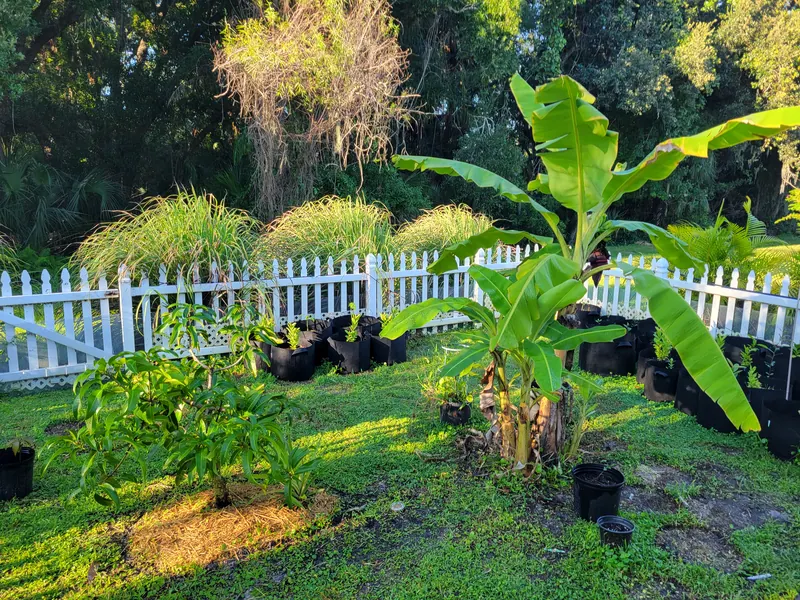
Our backyard prototype gives us a place to care for young plants while we prepare for the future farm. Many are growing in containers with the intention of moving them to the land when it becomes available.
Explore What We Are Growing